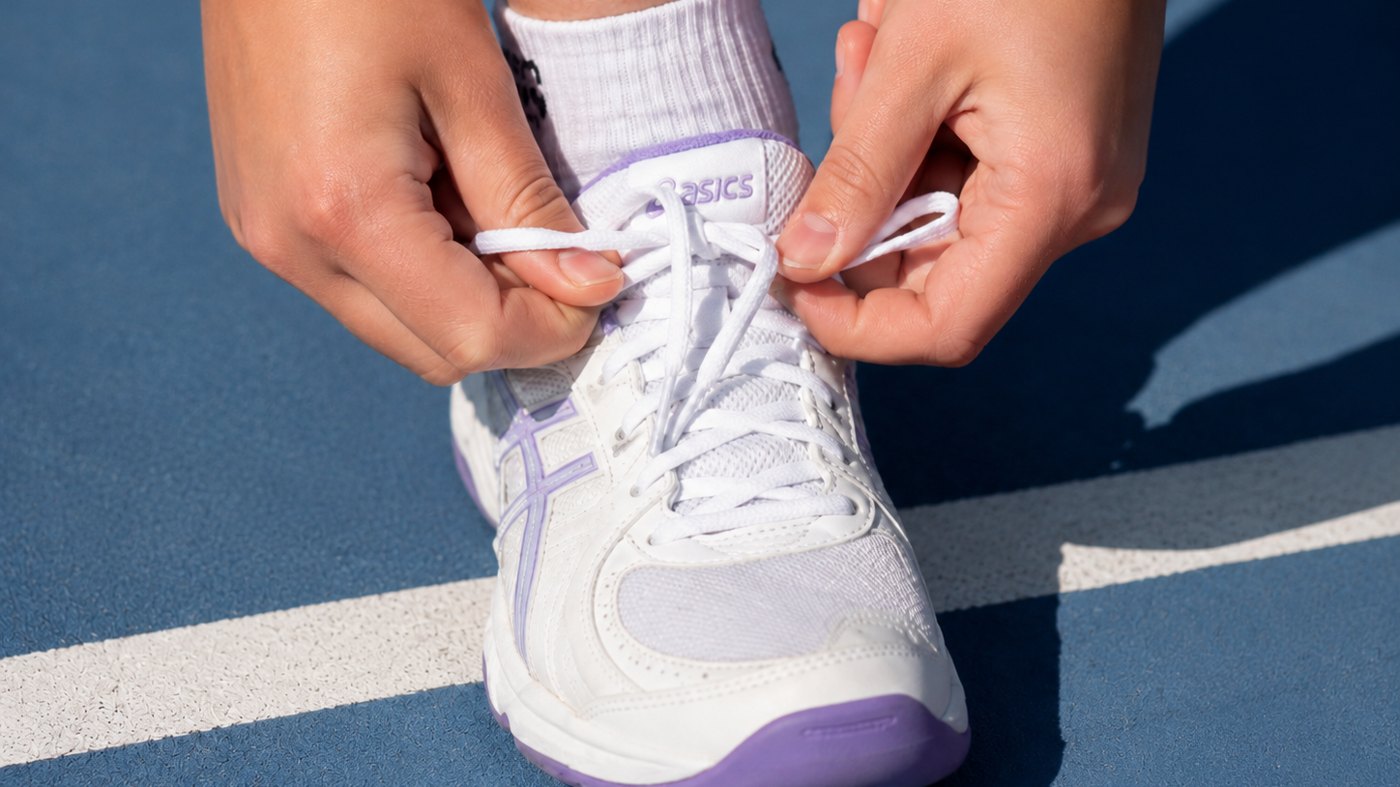
A discussion in our umpiring group chat this week got me thinking. The question was whether umpires should hold time for a player to tie a shoe lace. It came up after a few of us had spotted it happening in matches at the Commonwealth Games, and there were different views on the correct decision. I'll come back to this, because I don't think the question is really about laces. But first I want to talk about the football World Cup, which finished only a few weeks ago, because it took me back to the thoughts I'd been having throughout that tournament about the approach the referees were taking.
Where did the yellow cards go?
If you watched the Premier League last season, you saw 5.30 yellow cards a game — a record. The World Cup produced 2.52 a match, the lowest of any World Cup this century and well below the 3.50 of Qatar four years ago. Fouls did drop a little, but nowhere near enough to account for that. Referees were reportedly briefed not to punish 'normal football contact' and to keep the game moving, and journalists covering the tournament described a clear directive from the top to be sparing with cards.
Football's laws aren't vague here, either. Law 12 says a player who fouls to stop a promising attack must be cautioned. Must, not may. Anyone who watched the group stage saw shirt-pulls and late trips that met that definition and went unpunished; Paraguay committed thirteen fouls against France in the last sixteen without picking up a single booking. In the Premier League those are yellow cards all day long. The players know it, the crowds know it, and the same referees give them, week in, week out. At a World Cup, apparently, they don't — and it's hard to see any explanation other than an instruction. You can guess at the reasons: nobody at FIFA wants star players suspended for a key match, or a showpiece decided by a sending-off.
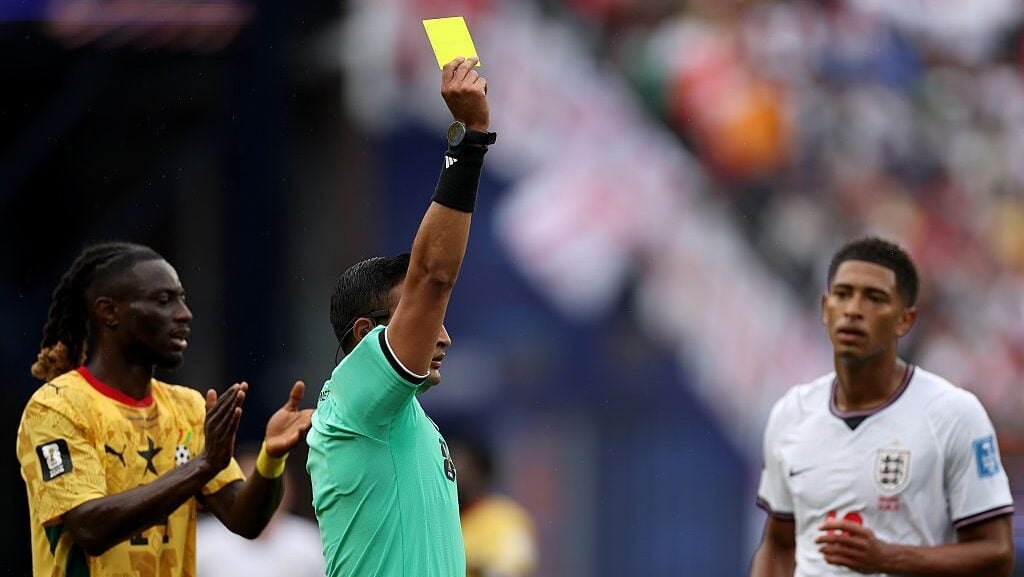
To be fair, it wasn't leniency across the board. Red cards actually went up, largely through VAR and some new automatic sending-off offences (such as covering the mouth in a confrontation). What collapsed was specifically the yellow card with an element of subjectivity to it — even if most would agree the laws made cautions mandatory in many of the cases we saw go uncarded.
Dissent went unpunished
The place this bothered me most was dissent. Before the tournament, FIFA announced a captains-only rule with real teeth: any other player approaching the referee to contest a decision was supposed to be automatically cautioned. Then the tournament started.
Seventy-two group games. Two dissent cautions.
FIFA's own group-stage figures, reported by Pierluigi CollinaFIFA's reading is that the rule deterred the behaviour. That's not what I saw — I watched players shouting in referees' faces, and fourth officials and assistants getting some genuinely unpleasant treatment, with nothing given.
I have some sympathy for the referees themselves. Booking dissent in a World Cup match makes you the story. It invites the pundit saying you want to make yourself the centre of attention, or the commentator wondering whether you've lost control. These officials are marked by assessors on every match and are competing with each other for the biggest appointments of their careers. If the direction from above is to keep cards to a minimum, the safe decision — for your tournament, for your career — is to let it slide. So they did.
A referee with nothing to lose
Which brings me to the final. In the 82nd minute, with Argentina chasing the game against Spain, Slavko Vinčić booked Enzo Fernández for dissent — the first dissent caution I could remember seeing all tournament, arriving in the biggest match of all. Fernández was on the floor, arms waving, shouting at the referee; it was as clear as dissent gets, and it was exactly the sort of thing that had gone unpunished for the previous month. In stoppage time Fernández lunged into a late challenge and collected a second yellow. Off he went, and Argentina finished the final with ten players.
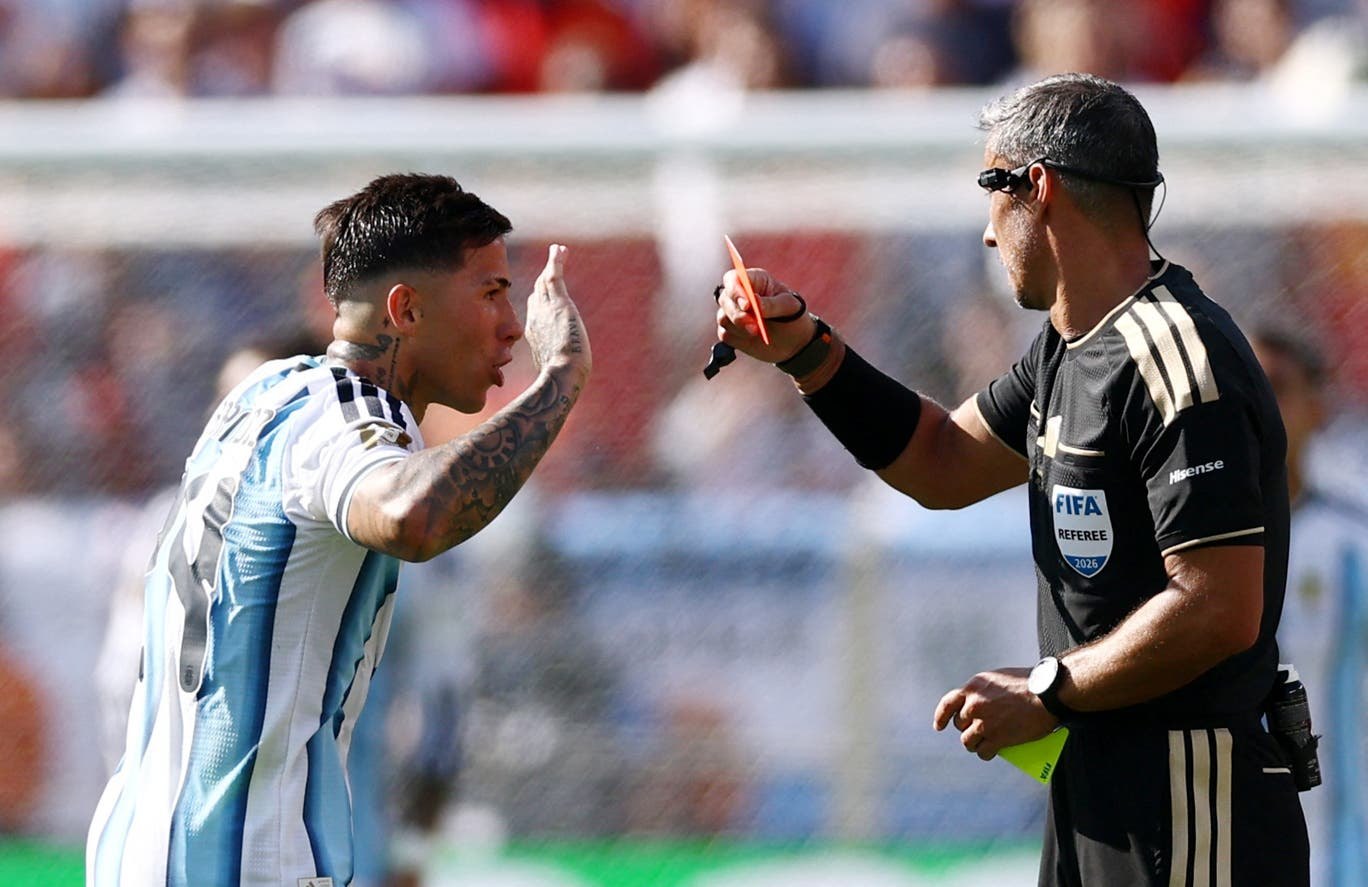
A week after the final, Vinčić announced his retirement. No-one but him knows what went through his head, or whether he'd already decided the final would be his last match — but you do wonder whether having nothing left to lose gave him the freedom to (correctly) apply the laws and give a thoroughly deserved yellow card for dissent.
What trickles down
During the tournament I found myself reflecting that I'm glad I no longer referee football. I wouldn't want to be walking out onto a park pitch to referee players who've spent the last month watching the World Cup and now think that's how games should be refereed.
The laws tell the grassroots referee that a cynical tug that kills a counter-attack is a caution, so they give it. Except the player watched the World Cup, and the World Cup just spent a month showing them it isn't a caution. Now the grassroots official is the awkward one, the card-happy one, the one who 'wouldn't let the game flow'. Researchers who surveyed thousands of referees about abuse found exactly this: leniency towards abusive players at the elite level normalises that behaviour all the way down. The FA's own figures have allegations of assaults on grassroots officials up by a third in a season. When the top of the game doesn't enforce the laws that protect its officials, the effects land on the grassroots referees who keep the game functioning at all — and unlike at the top level, they have no stewards to escort them off the pitch or keep unhappy fans at arm's length.
Back to the laces
Returning to netball, our rule book is actually reasonably plain about stoppages. Umpires must hold time for injury or illness (following a request) and for blood. They may hold time for an emergency or in other extreme circumstances. And Rule 10 adds, pointedly, that time may be held sparingly where playing time would materially be lost — otherwise, playing time should not be stopped. An untied shoe lace is none of those things. It's not an injury, it's not an emergency, and it's entirely within the player's control. The technically correct answer is that the player ties it during a natural break, or their team makes a tactical change, or they play on. And if, say, a goal keeper pauses to tie a lace while everyone waits for her throw-in, that would technically — at least on the face of it — be delaying play.
Now picture actually doing that. You refuse to hold time, the superstar shooter plays on with a flapping lace, and 30 seconds later she's in a heap having tripped on it. Or you penalise a player for delaying play over a shoe lace in a tight final quarter, and the penalty leads to the goal that settles it. In either case you are, instantly, the centre of attention — exactly where we don't want to be as umpires. You may have made the technically right decision, but was it really the right thing to do? Holding time would have taken a few seconds and avoided all of the drama, and provided it isn't at a critical moment, it isn't likely to unfairly impact the other team either.
I'm genuinely not sure where that leaves us. If we're thinking in terms of 'safe' umpiring, holding time is certainly the safer option: it interrupts the game slightly, but avoids the potential for a far bigger issue later on. It's the tough balance an umpire has to strike, especially at the top level, where every decision is viewed under a microscope.
A sport that wants to be watched
These pressures are only going to increase as netball looks to grow its audience and its TV coverage. I've written before about how the SSN is officiated — the huge hits that would be penalised at national level in other countries, and my suspicion that this is the guidance the umpires have been given, to allow the physicality and increase the intensity of the play. They also let go some very heavy contacts that would be viewed as dangerous play in most other countries.
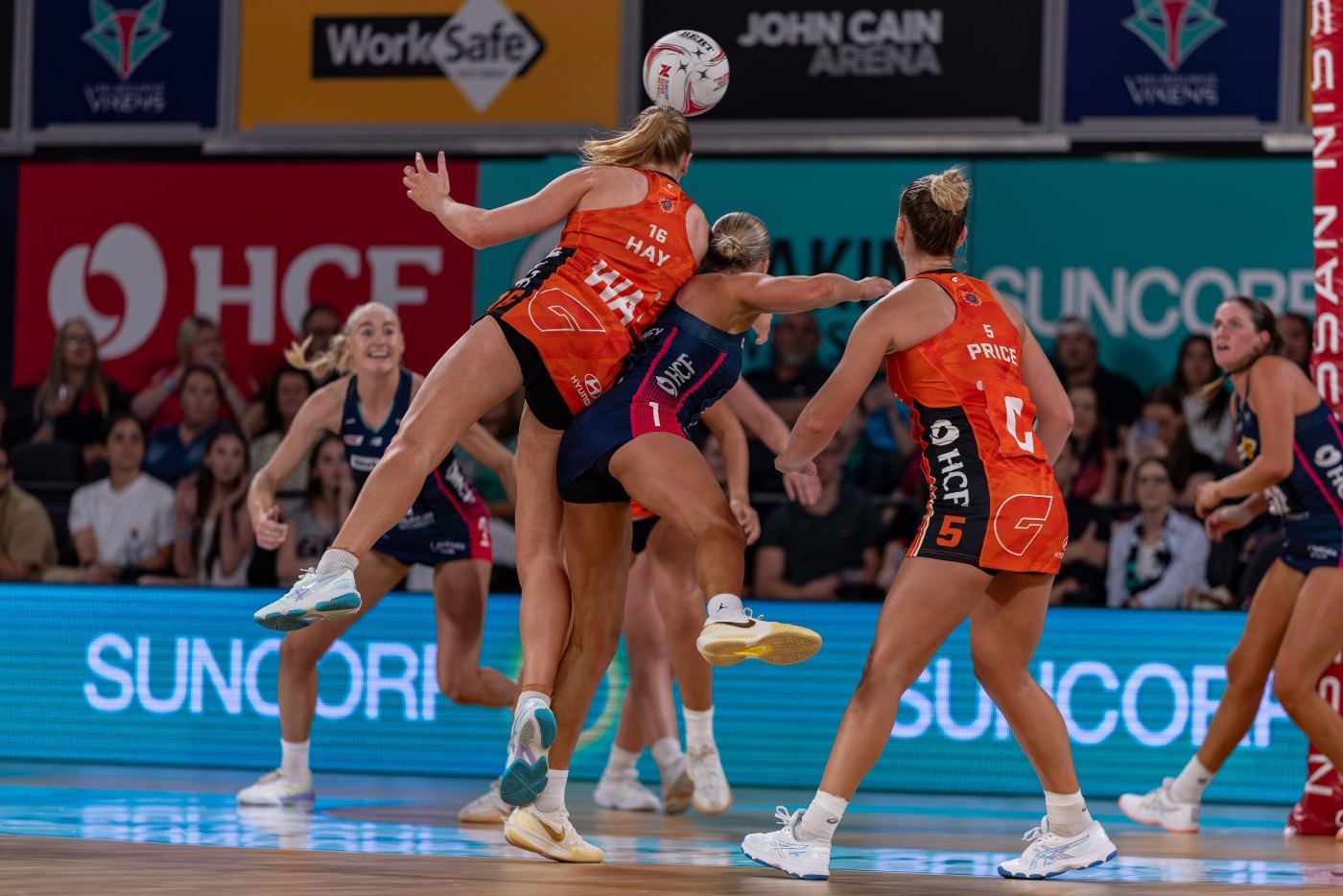
None of this needs to be written down anywhere or formally said to umpires. Umpires get a feel for what their competition wants from assessors and other stakeholders in the governing body. They absorb it, and it comes through in their umpiring — the same way it did at the football World Cup.
You can see the same instinct in how big netball matches are managed. There's a quiet pressure to keep game management minimal early — don't back yourself into a corner, keep your options open, save the escalation for when you really need it — because no umpire wants to have shaped the result. Most of the time that's just sensible umpiring. But it means that when a genuinely dangerous act needs a suspension in the last quarter of a final, the call takes real courage, because you're about to become the headline, and at least one commentator who hasn't read the rule book will explain how you ruined the game.
‘I don’t want you doing that’
After I’d initially written this post, I watched the Commonwealth Games semi-final between Australia and Jamaica, and saw netball’s version of the same problem. Courtney Bruce, the Australian Goal Keeper, had already had a penalty advanced against her in the first quarter for delaying play. Then, late in the second quarter with Jamaica three goals up, came the moment in this clip.
Watch Bruce as the Jamaican shooter lines up the shot. She stands very close to her and thrusts her head towards her — at least twice. There’s no legitimate defensive reason for doing it. The only purpose I can see is to distract the shooter.
“A player, either with or without the ball, must not intimidate an opponent by using behaviour designed to distract (including verbal comments) to obtain an unfair advantage.”
Rule 19.6, World Netball Rules 2024To me, this looks like a textbook example of intimidation.
The umpire called obstruction, and told Bruce, “I don’t want you doing that.”
I can understand why he wouldn’t want to call it. Because Bruce had already had a penalty advanced, calling intimidation would mean giving her a warning. That would put the Australian goal keeper one act of unfair play away from a two-minute suspension, and it would leave the umpires nowhere to go on repeated infringing, which could easily rack up with the whole second half of the game still to come. It could change the course of what was a really close game, and thrust the umpires into the spotlight — exactly where they don’t want to be. By calling obstruction and having a word, the umpire avoids all of that. It’s the same instinct we saw from the World Cup referees, and the same tricky balance between technical correctness and the wider spectacle of the game.
But think about a grassroots umpire watching that game. They’ve read the rule book. They know behaviour designed to distract is intimidation, and that they’re expected to call it. What they’ve just seen is an international umpire look at exactly that and call obstruction instead. It doesn’t seem to follow the rule book, and it leaves them questioning what the right thing to do is.
I don’t claim to have the answers here, but I wanted to highlight the tension elite umpires face when making their decisions. It’s only going to grow as netball seeks to increase its TV coverage, and there needs to be some consideration of what that does to umpires at the non-elite level.
We can't allow dissent to get out of hand
Maybe some of this is fine. Holding time for a lace costs little, and it doesn't affect the integrity of the result. But football has just shown us where the far end of this road is, and the bit that worries me is dissent.
“Crowds are alongside the umpires, can be very confronting, and unfortunately incidences [of abuse] are increasing.”
Michelle Phippard, multiple-World Cup umpire, on grassroots netballPhippard's point is that elite umpires are largely protected from crowds — the abuse reaches them online, afterwards — while at grassroots the crowds are right there, courtside. We cannot let netball go the way of football, with players — particularly young players — seeing significant acts of dissent go unpunished, as we saw taken to an extreme at the World Cup. Whatever flexibility there may be around certain aspects of the rules at the elite level, this is a line that shouldn't be crossed.
The tightrope umpires have to walk
All of this shows the challenges umpires face, at all levels, but particularly at the elite level, where both the intensity of the game and the scrutiny on decision-making are so much higher. Apply the rules correctly, but don't be officious about it. Keep players safe, but let the game breathe. Be decisive, but don't be the centre of attention. I wrote in an earlier post that the umpire's job is to facilitate a fair, safe, flowing game — I stand by that, but I'd add that the facilitating happens inside a set of expectations the rule book never mentions, and the balance between making correct decisions and having empathy for the game and letting it flow is a tightrope umpires have to walk.
I don't know where the right place is to draw this line. As netball professionalises and chases the audiences it deserves, it's going to have to work out how much daylight between the written rules and the umpired game it's willing to live with.