What is the role of a netball umpire? It might seem like an obvious answer — they're there to umpire the game — but I think the role has changed significantly over time. I came to netball through football (I started refereeing at 14, and my granddad was a referee before me), so I'd view this through the wider lens of officiating more generally. I'll start off with football, a sport whose history I'm more familiar with.
What officiating used to be, and what it's become
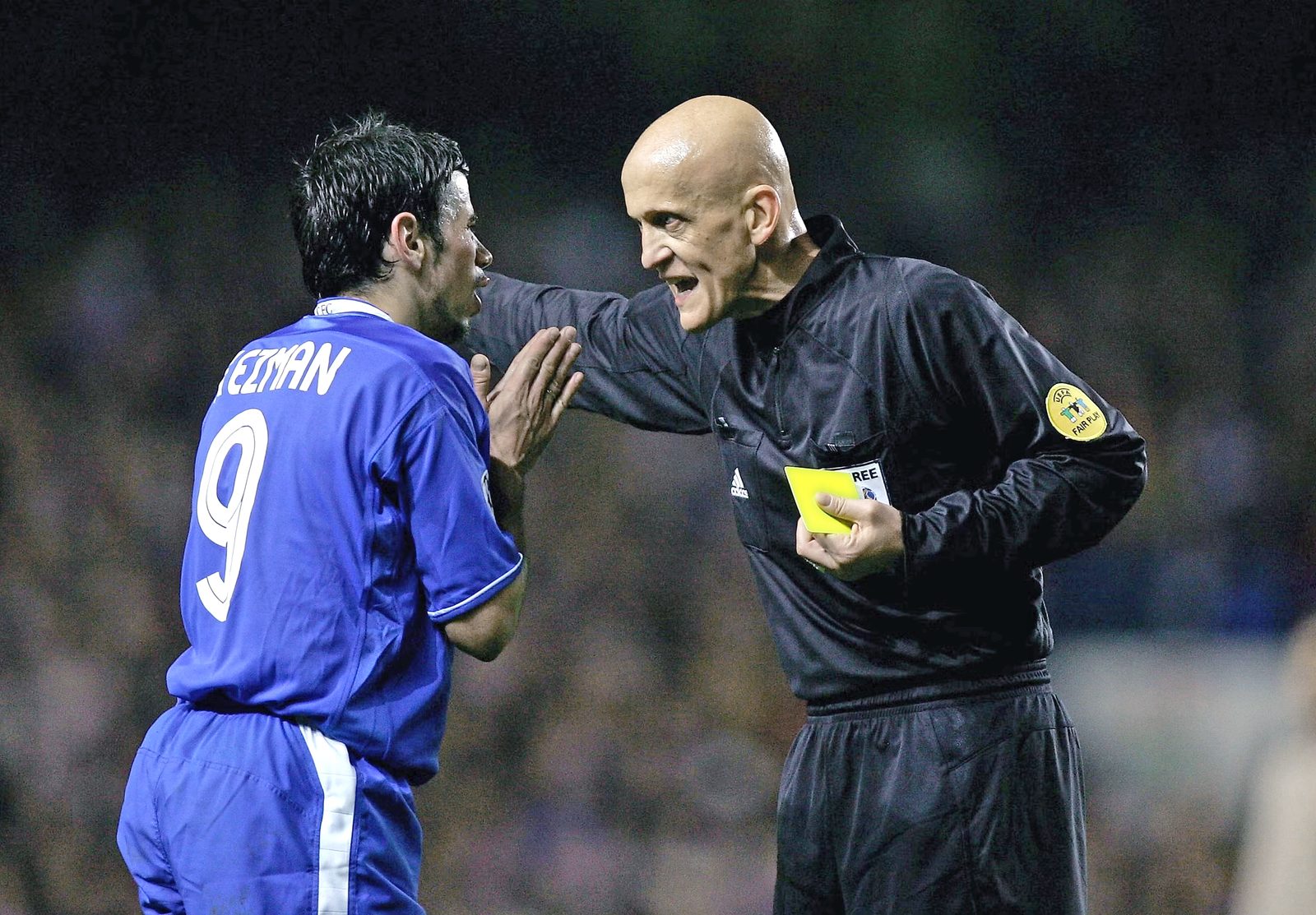
Think about how refereeing looked thirty or forty years ago, around the time my granddad was doing it. It was much closer to a schoolteacher's role, or even a drill sergeant's: the official was there to keep order and keep control. The referee was the authority in the room, and everyone knew it. Who can forget the imposing figure of Pierluigi Collina.
Compare that to a modern football referee and the change is striking. The best of them are now part of the game rather than standing over it. The aim is almost to go unnoticed, to facilitate, to keep things flowing and let the contest be the showpiece. You don't get the big-character referees you once did — I couldn't imagine a referee like Collina officiating today; they'd be accused of being the centre of attention and I think would be pushed out. Instead you now get officials with a deep understanding of the game who want to let it flow and make it a spectacle.
It's no coincidence that the leagues people most want to watch tend to be refereed this way. A lot of the Premier League's appeal (fewer stoppages, a more physical and free-flowing game) comes down to how it's officiated. The flip side is that the job has got harder, not easier. The scrutiny is enormous, the cameras catch everything, and officials are asked to balance competing demands that simply didn't exist a generation ago.
So what is the netball umpire there to do?
My own view is that the netball umpire is there to facilitate: to facilitate a fair game, to keep players safe, and to let the contest breathe and make the game as enjoyable as possible for the players and spectators alike. That's it. You're not there to boss people around, you're not on a power trip, and you're certainly not there to catch people out.
It's not a schoolteacher's role, and certainly not a drill sergeant's, and I think it's important that's reflected in how we communicate with players, both on and off court. We shouldn't be telling players off like they're small children. If we need a player to change a behaviour, we should approach it respectfully, with clear advice and a firm voice, but that's a different thing from being condescending.
In many ways this is easier to do in netball than it was in football, as the sport is much more collegiate and far less adversarial towards officials. As a football referee, rarely would anyone want a rational conversation with you. If decisions had gone a team's way, you were the best referee they'd had all season — if they didn't, you were awful and should hang up your whistle. It wasn't uncommon to get both sets of feedback on the same match.
Umpire proactively
Where you can, get ahead of problems rather than waiting to penalise them. If there's a chance for a quick clarifying word, something as simple as 'you're pushing in with your hip there, your outside arm's fine', the player knows exactly why they've been penalised. That stops a small thing escalating into something you'd later have to deal with down the game-management route, and it stops a frustrated player turning into a flashpoint a few minutes on.
This matters most at lower-level games, where you'll often have newer players and the environment's a bit more relaxed, so there's more scope to have a quiet word with a player (or their captain or coach) at quarter time. It's not coaching, to be clear. It's just clarifying why we're penalising something and giving them the chance to change it. I've found this especially true doing mixed netball, where you can have players who've played very little netball at all, don't really understand what they're being penalised for, and get frustrated quickly. A few words of clarification can smooth the whole thing over before it blows up into something bigger.
It's trickier at the top level, where you'd expect a baseline of rules knowledge and it generally isn't seen as the done thing to approach players at quarter time (unless you need a word with the captains for a game that's getting out of hand). But you can still sometimes fit in a quick explanation if a player's being repeatedly penalised and you can tell from their confused face they don't know what for.
Make it a two-way relationship
I'd love to see more genuine collaboration between umpires and teams. I wish more clubs, particularly at the top levels, invited umpires into their training to talk through interpretation, and I wish more players were inquisitive in the moment, asking a question at a quarter-time interval rather than staying quiet and then grumbling at full time (often to everyone except the umpire who could actually have explained it). More often than not, if they'd just asked, they'd have understood what we were seeing and been able to adjust.
Timing matters, though. I'm always happy to come down to a club's session, but not in the build-up to a final or a big match I'm due to umpire (it puts everyone in an awkward spot, and it isn't fair to the other side). The off-season is ideal: teams are often still training, but you won't be officiating them in anything that counts for months, so there's no conflict at all.
This, honestly, is a big part of why I built this site. I wanted somewhere to create content for coaches and players, not just umpires, and to offer a window into how we see the game: what we're actually looking at, how we weigh things up, and why we interpret rules the way we do.
Be upfront about how we're calling it
You don't have to watch much of an SSN game to see massive hits that would be umpired quite differently even at national level in other countries. I'd argue that's one of the reasons their league is the spectacle it is, why it attracts the viewership it does, and why it's the top league in the world. It's exactly the kind of thing people want to watch, and I expect the umpires have been directed to do their utmost to facilitate it. I'd like to see greater communication with coaches about this, particularly at the top level, and I think it would make for a better relationship all round. To be fair, a lot of coaches now understand this is how the game's umpired, though it's taken them two seasons to get there!
On a related note, at the top level you'll often have a panel of umpires who get together to debrief and review. If they decide as a group to be hot on a particular area, or to take a different interpretation, I think we should do a better job of engaging clubs and letting them know that's the plan. It reduces the surprise and makes the whole thing far less confrontational. It can really wind a team and coach up if they're suddenly getting pinged for things they've done all season with no issue, and they can struggle to adapt in the moment.
Knowing when not to blow
Advantage is a big part of keeping a game flowing, and no-one likes to watch — or play in — a game that's constantly stop-start with a lot of whistle. Playing advantage well is central to making the game a spectacle. It takes a good understanding of the game, and the vision to read it, to know when to play advantage and when an infringement needs penalising — including when you need to step in to stop things getting out of hand.
It's a skill in any sport, but I'd say it's particularly tricky in netball because of how advantage works. It's an instantaneous decision at the point of the infringement: you have to judge there and then whether to play advantage, with no chance to go back if it doesn't materialise (or if you simply got it wrong!). In football, for example, the referee can play on for a few seconds, wait to see whether the advantage comes off, and bring play back for the original foul if it doesn't. The pace of netball means we wouldn't want to wait that long, but I do wonder whether there's room for a shorter version of ‘wait and see’, as other sports have. As things stand, though, that isn't how advantage works, so we rely on umpires' skill in making those split-second decisions.
Talk after the game, too
At higher-level games there's usually an opportunity for coaches to speak with the umpires afterwards, and I'm surprised how rarely it's used. Every conversation I've been involved in has been a constructive one. It's a real chance for a coach to understand a particular decision, to ask why a certain player was penalised more or less, and to put their own perspective forward (respectfully) about how they felt the game went. Done well, it's a genuine two-way conversation, and both sides come away the better for it.
The umpire you don't notice
There's an old adage that the best official is the one you don't notice or remember after the game, and I think it's very true. If we've done a good job, we'll have facilitated a good game, and that's what the discussion will be about afterwards, not us. It's almost the opposite of the Collina-era ideal, the authority figure everyone remembers. The job isn't to impose authority. It's to facilitate a fair, safe, flowing game, and to bring players and coaches along with you rather than against you.
If you're a coach or player and you've ever wanted to understand how umpires see things, just ask. Players can do it at quarter-time breaks, coaches respectfully after the game. I'd far rather have that conversation than leave you guessing. Even better, pick up a whistle yourself or book onto an umpiring course, and you might appreciate that it's harder than it looks!