
In May 2026, World Netball opened its Minor Rules Review — a chance for member associations and panels to propose clarifications and refinements to the Rules of Netball ahead of the 2027 World Cup. This got me thinking what changes I would propose.
These are the rules I'd change, or the things I think are unclear or just missing from the rule book. These are just my thoughts and I've no doubt missed things.
Weardown
I'm opening with this because I think it's probably the most significant — and yet the one that's hardest to fix. The contact rule was clarified as part of the 2024 rules update, with a focus on “interference”. In many ways I think that's been a positive change for the game: it's made it more flowing, more competitive, more physical, and a better spectacle. But it has perhaps had some unintended consequences.
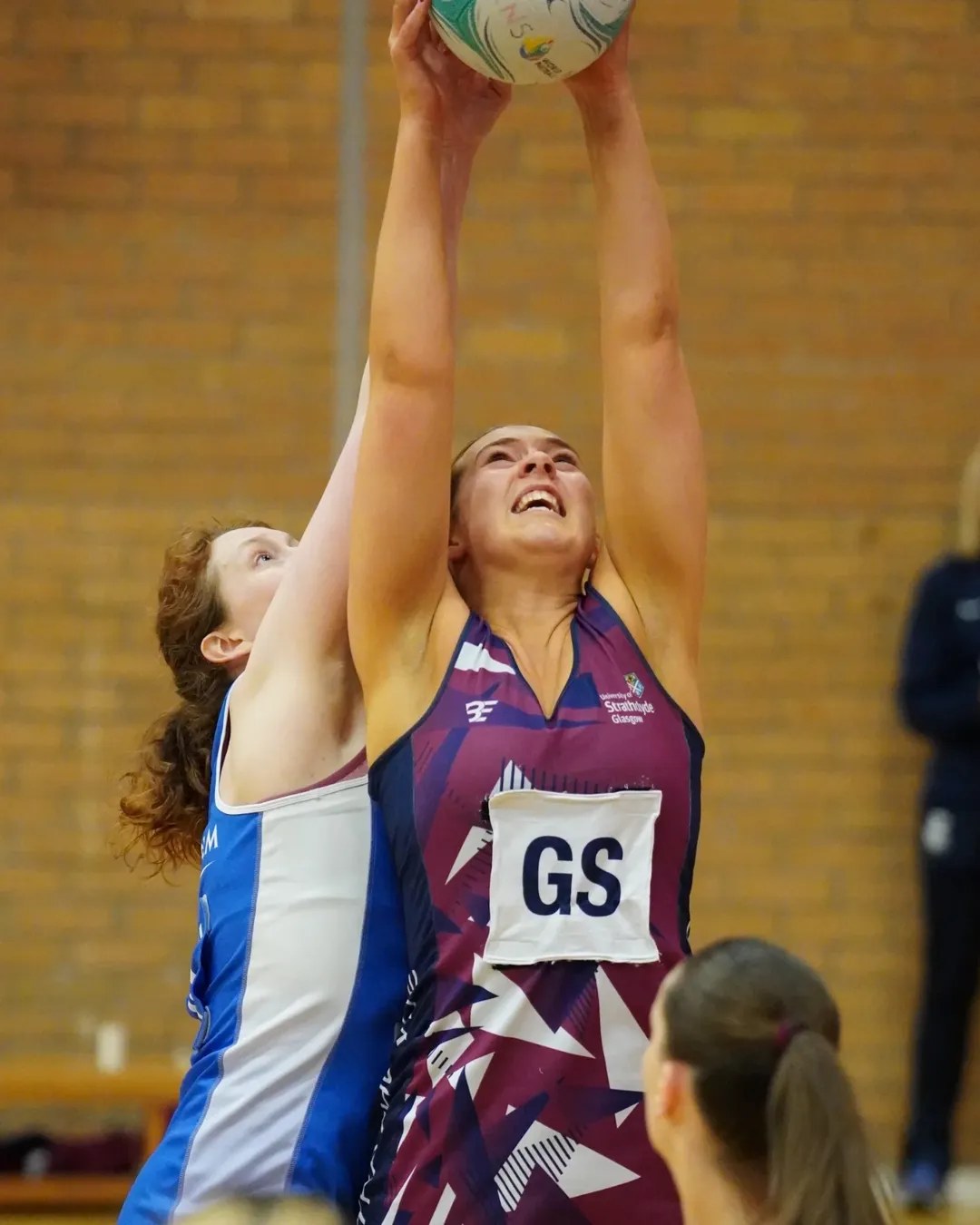
Picture a strong Goal Shooter being repeatedly bumped in the air by the Goal Keeper. The GS rides the contact every time, takes the ball cleanly and comes down balanced, ready to shoot. There's no interference to penalise — the shooter's play simply isn't affected in any single moment. But there's still physical contact every time, and across four quarters that wears a player down. It's both a fairness issue and, genuinely, an injury risk.
The trouble is that the rule is built to judge contact instant by instant. Each individual bump, on its own, is fair contest — so there's nothing to penalise, and nothing to “repeat” either. The cumulative effect has nowhere to live in the current wording.
In truth, addressing this properly may take more than a minor change, so it perhaps falls outside the scope of this particular rules update.
The on-court captain
Another thing I'd change is the on-court captain, and in particular the requirement for them to wear identification. I think it adds very little and mostly just creates overhead, and I'm not sure what it's meant to achieve.
The rules do allow me to hold time and speak to the on-court captain about a player's behaviour, but I don't think I've ever done it. Netball doesn't lend itself to that kind of stoppage. In rugby or football there are natural breaks, or lulls in play, where a referee can have a word with the captain. Netball doesn't really have those. If the player I'm concerned about is the Goal Defence and the captain is the Goal Shooter, I'm not going to bring the captain the length of the court and delay the game.
Where I might speak to the captains is at quarter time, but that doesn't need any identification. You just go over and ask for one or both captains to come over. You should know who they are anyway, because they'll have identified themselves, or you'll have asked, during the pre-match checks.
Where the identification gets most disruptive is at a tactical change. Teams forget to switch it over, or they do switch it and it's fiddly and slow, and the game is held up for no good reason. A slick team gets round this by having the player coming on already wearing one when the captain goes off. That almost makes a mockery of the whole idea, because the on-court captain is then just whoever happens to be coming on, and not necessarily anyone in the team's leadership group.
So I'd get rid of the on-court captain altogether, and the identification with it. Find out who the captain is, and maybe the vice-captain, at the pre-match checks. If you need the captains, you'll be speaking to them at quarter time, and you can carry on doing that. During play you'd speak to the players concerned, which is generally what happens anyway, and the captain may not even be on court. I think needing to hold time for that is very uncommon in any case.
Rules I'd like clarified
What exactly is a “kick”?
Players are not allowed to kick the ball — that's incorrect playing of the ball. However, ask three umpires what counts as a kick and you may get three answers — does a foot that's stationary count if the ball strikes it? What about a knee, or the lower leg? The rule forbids it but never defines it, and I think it should, to give clarity. This is the tidiest change on my list: add one line to the Definitions.
Are warnings advanced?
Here's the specific case. A player is advanced for repeated infringing, say, and then keeps infringing, so it escalates to a warning. Is that warning advanced? We've seen a lot of inconsistency. My reading is that this is still unfair play, and the sanction for unfair play is a penalty that is advanced — so the warning should be advanced too. But that seems to be the minority view; most of the time, warnings aren't advanced. It just needs clarifying in the rule so we all land on the same interpretation.
Measuring obstruction once the defender leaves the ground
Picture a defender who is within three feet of the player with the ball — and therefore not allowed to defend — who jumps backwards and only raises their arms once they're in the air. Is that obstruction? The three-foot distance is measured from the feet in contact with the ground, so the moment a defender is airborne there's nothing to measure from. The rule book tells us how to handle a defender jumping towards the player from a legal distance, and it covers the lift and the pivot adjustment, but it doesn't address a defender taking off from inside the distance to put their arms up mid-air.
My view is that we should measure from the last point the defender's foot was grounded on court — so we'd require them to establish a foot at least three feet away before defending, much as we require a player to re-establish on court before playing the ball. Otherwise you end up with the silly situation where a defender simply jumps up and down within three feet, making sure they only defend while they're in the air.
Where the penalty is set when a circle defender obstructs outside the circle
When a GK or GD obstructs an attacker who's standing outside the goal circle, common practice seems to set the penalty inside the circle. But that arguably short-changes the attack: had the penalty been set outside, they'd have the two-on-one in the circle, which is likely to lead to an easier shot. A penalty set inside does give an opportunity to shoot, but most players won't be taking a shot from just inside the circle. My preference is to set it where the obstructed player was standing — outside. The rule's own wording seems to support this (see below), but it doesn't seem to be the widely used interpretation, so I'd like to see it clarified.
Over a third when there is a deflection off a defender
The over a third rule is fairly clear cut, but one scenario I don't think is covered is when a team throws a long ball from their defensive goal third and it brushes a defender's fingertips in that goal third before travelling all the way to the attacking goal third without being touched. The rule currently just states a sanction but doesn't make it clear who it's awarded to. You could argue it both ways:
- The defender was the last player to touch the ball, so their team should be penalised.
- The attacking team was the last team to make an intentional play on the ball, so they should be penalised.
The first hardly feels in the spirit of things. It would be different if the defending team had played the ball deliberately, but here the attacking team are the ones who threw the long ball, so the responsibility in some sense sits with them to ensure the ball is touched in each third.
My proposal would be to adjust the rule to clarify that the sanction is awarded against the last team to deliberately play the ball. You could argue that introduces some ambiguity about intent — but that's already present in the playing-the-ball rule, where we have to distinguish controlled touches from uncontrolled tips, so it's something umpires are already familiar with and have a good feel for.
A throw-in that goes through the ring
A GA or GS takes a throw-in and the ball sails straight through the ring. I know it can't be a goal — a shot has to come from inside the circle. My actual question is whether we should penalise it as an incorrect shot. I don't think we should: it was never a shot, so there's nothing to be “incorrect” about, and play should simply continue (unless the ball failed to enter the court, which is just an ordinary incorrect throw-in). But the rule book never spells the case out, and one line would settle it.
Running the clock down to avoid taking a centre pass
A team takes so long getting the ball back that the quarter ends before the centre pass is taken. We can hold time and penalise delaying play — so there is a disincentive — but if we're not quick enough to do that and time ends up running out, there's some ambiguity over how it should be penalised. My view is that we can still penalise it at the start of the following quarter, in line with the guidance for “infringements during a break in play”: we'd penalise the delaying play at the start of the next quarter, and they'd lose the centre pass. I've spoken to a few umpires and there are different views on this, so it would be good to clarify.
Dangerous play against your own teammate
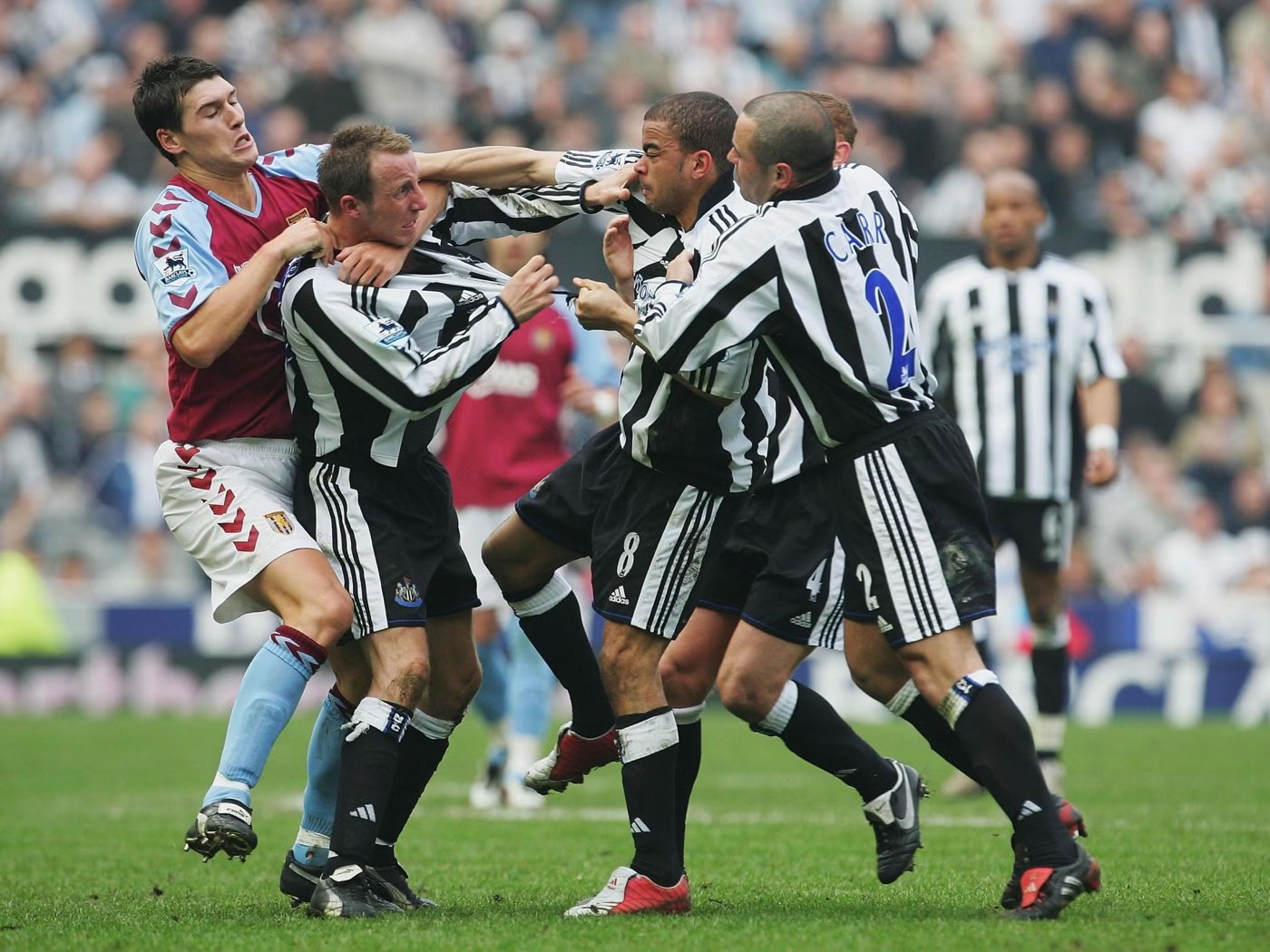
Could a player ever be penalised for dangerous play against their own team — for example, taking out a teammate in the air? The rule refers to endangering the safety of “another player”, so seemingly the answer could be yes, though I think it would raise some eyebrows if it were ever called. Taking a lead from other sports, my instinct is that you normally wouldn't penalise contact between teammates — unless it's intentional. A memorable example from football is the case of two Newcastle United players, Lee Bowyer and Kieron Dyer, coming to blows with each other and both being sent off. This could be clarified in the rules.
Things the rule book doesn't cover
Swapping positions in open play
A GS and GA swap roles while the ball is up the other end, mid-play, with no stoppage. It feels like it shouldn't be allowed, but I can't point to the rule it breaks or how I'd penalise it. The rule book tells us when a team change may happen — an interval, an injury or blood stoppage, or a tactical change after a goal — but prescribes no sanction for an unauthorised swap during live play.
Contact that forces a player offside where we can play advantage
A defender's contact pushes an attacker into an offside area and we can play advantage for the attacking team. In practice you'd do this and simply ignore the forced offside — but nothing in the rule book actually says that a second infringement caused by the first should be disregarded. It's the obvious, common-sense call, but I think it should be made explicit in the rule book.
An umpire patched up and ready to return
An umpire gets a nosebleed, the reserve takes over, and a few minutes later the umpire has stopped bleeding and is ready to go again. Do they resume, or does the reserve see out the match? The rule book covers the reserve replacing an injured umpire but says nothing about the original umpire coming back. This would be good to clarify.
Over to you
Those are my ideas. The window for proposals closed on 7 September 2026, so it's now a case of waiting to see what World Netball takes forward. There's more about the review on World Netball's website.
And if you think I've got any of this wrong, or you disagree with my proposals, please reach out and contact me — I'd love to hear from you.