This case study follows the Northern Ireland GD through the World Cup qualifier between Scotland and Northern Ireland on 26 September 2026. She was suspended for dangerous play in the first quarter, then ordered off in the second after a second act of dangerous play. Ordering offs are rare, so this is a good chance to see the whole procedure — along with a tactical change during the suspension that went wrong.
For each clip, watch it through and form your own view before revealing ours. The umpires handle most of this well, but not all of it, and where something goes wrong we say what we would expect instead. At the end there is one more example of dangerous play from the same tournament.
How the match unfolds:
The suspension
When a player is taken out in the air, we work through three questions:
Is there a contact infringement?
Does it endanger player safety? If it does, it is dangerous play, and the minimum is a suspension.
Is it intentional or highly reckless? If it is, it is an ordering off rather than a suspension.
There is more on each question, and on judging dangerous play generally, on the Rule 19 page.
Suspended for dangerous play
Midway through the first quarter, the Scotland Centre goes up to catch the ball, with the Northern Ireland GD coming in to challenge.
Dangerous play — a suspension for the Northern Ireland GD.
The GD almost loses her bearings. She stays on the ground and tries to pull out of the challenge, but ends up moving into the Centre's landing place, which takes the Centre out in the air and causes an awkward landing.
Working through the questions: there is clearly contact, and it has caused an unsafe landing, so this is dangerous play. The GD is trying to pull out of the challenge, so it isn't intentional or highly reckless, which makes it a suspension rather than an ordering off.
The umpires confer before giving the suspension, which is good practice. It's a quick check, and they both agree. The umpire also makes sure the floor is mopped before play restarts: two players have ended up on the floor, and time is already held, so it costs nothing to make sure nobody slips. Fortunately both players get straight back up, so there is no injury to deal with first.
Rule 17.9(b) — contact is normally dangerous play when it involves "a player who moves into the landing place of an opponent who has jumped into the air."
Rule 18.29 — "The umpire must suspend a player for instances of dangerous play unless the action concerned involves intentional or highly reckless acts of dangerous play that endanger player safety and are sufficiently serious to warrant immediate ordering off."
A tactical change during the suspension
Shortly after the suspension, Northern Ireland make a tactical change. The clip runs for a minute and a half, so watch it all the way through.
In the tactical change, the Northern Ireland WD comes off and a player wearing the GD bib comes on. That isn't allowed: while the GD is suspended, her position has to stay empty.
When the next goal goes in, the umpire nearest the camera holds time, goes over to confer, and the umpires tell the new GD she has to leave the court. The reserve umpire also looks to be alert to it. Northern Ireland then try to bring on a WD, but the umpires tell her she can't come on yet. She comes on at the following goal, when the umpire holds time again, which takes Northern Ireland back to six players.
Once it has been spotted, the GD leaves the court — and the WD comes straight on at that break in play, treated as a late player.
Ideally the umpires would have picked this up at the tactical change. When a team makes changes during a suspension, check the players coming on against the position that has to stay empty. Northern Ireland are allowed to make a tactical change while the GD is off, just not one that fills her position.
Once it is spotted, the umpires are right to send the GD off. The next part is less clear-cut, because the rules don't cover this exact situation, so it is for the umpires to decide. The WD position has been empty since the WD came off in the tactical change. The rules let a player fill an empty position at the next break in play — a late player, or a player coming back after an injury, for example — and the stoppage after a goal is a break in play. So we would treat the WD as a late player and let her straight on, rather than leaving Northern Ireland with five players until the next goal.
The reserve umpire is supervising the suspended GD and keeping track of who is on court, so they are well placed to spot this. If the umpires on court hadn't picked it up, we would expect the reserve umpire to ask the bench side umpire to hold time so it could be put right.
Rule 18.32 — "No substitute is permitted and the suspended player's position is left vacant unless this player is the Centre."
Rule 3.8 — "Any late player may, after advising the umpire, take the court in the vacant position/s at the next break in play."
Rule 4.1 — "The umpires control a match according to the Rules of the Game and decide any matter not covered by them."
Back from the suspension
Once her two minutes are up, the GD comes back on after a goal.
Does it have to be the suspended player who comes back on?
No — the team can bring on a substitute instead. Either way, the player comes on at the next break in play once the two minutes are up. The timekeepers time the two minutes and tell the reserve umpire, who lets the player know.
Here it is the same player who comes back on, which matters later in the match.
Rule 18.34 — "Once the suspension period has been completed, either the suspended player or a substitute may return to the court at the next break in play."
The ordering off
A second act of dangerous play
About three and a half minutes before half-time, the ball is played over the Northern Ireland GD to the Scotland Centre. Work through the same three questions — and think about what is different this time.
Dangerous play — and because the GD has already been suspended, an ordering off.
The Scotland Centre catches the ball, and the GD clumsily makes contact with her back before she lands, which causes both players to fall awkwardly. There is contact in the air, then more contact once they land.
The three questions give the same answer as last time. There is contact, on a player in the air, and it causes an unsafe landing, so it is dangerous play. It isn't intentional or highly reckless, so on its own it wouldn't be a direct ordering off. But a player can only be suspended once in a match, and this GD was suspended in the first quarter, so it now becomes an ordering off.
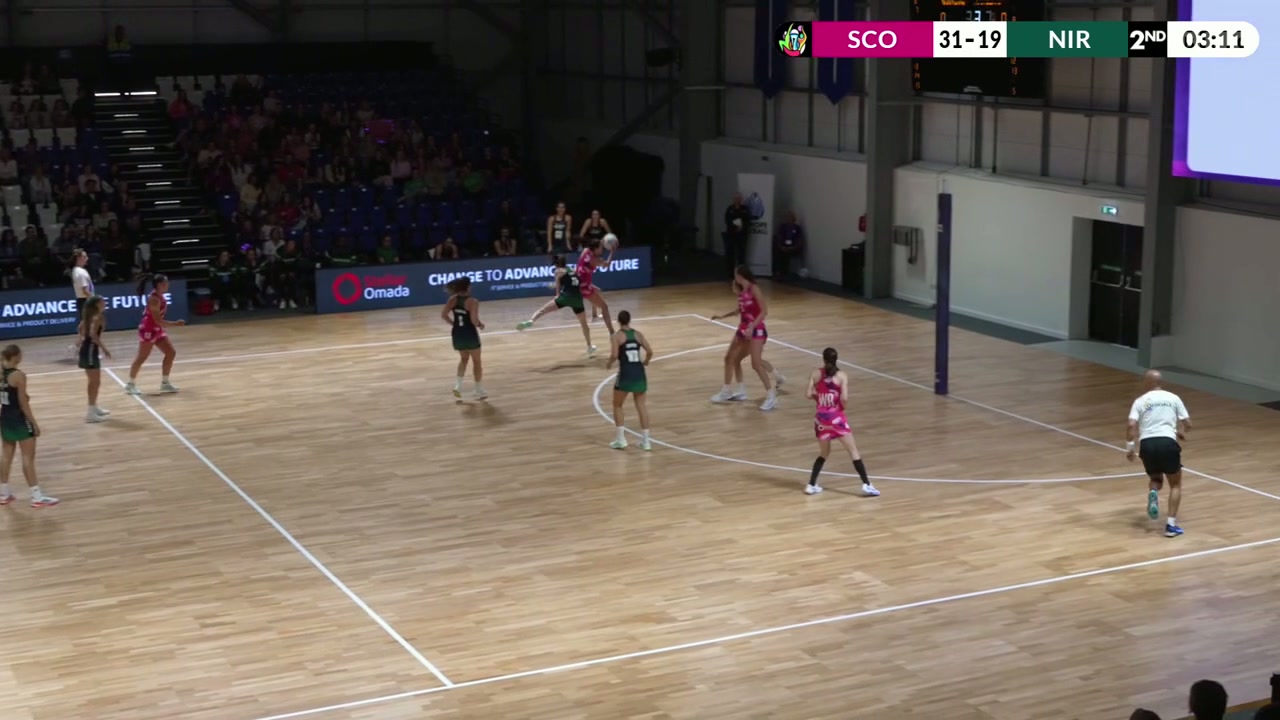
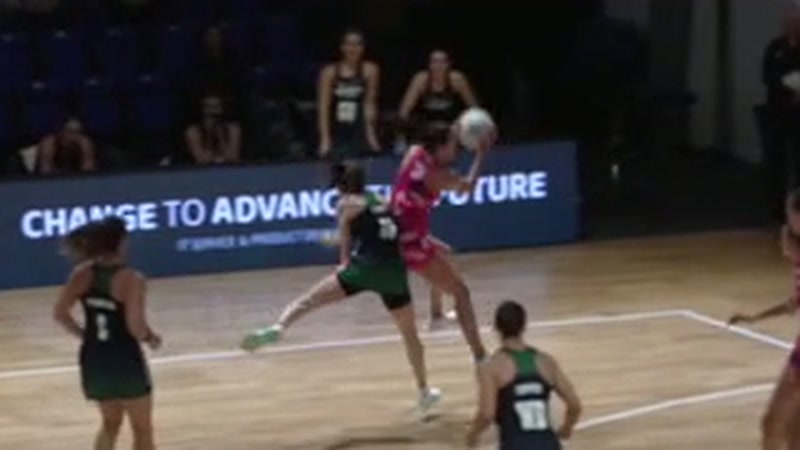
7.4 seconds into the clip: the contact comes while the Centre is still in the air.
This happens very rarely, so it is worth knowing the procedure. The GD sits at the umpires' bench, supervised by the reserve umpire, for four minutes of playing time, starting when play restarts. Her position stays empty for those four minutes, and she takes no further part in the match.
Rule 17.9(a) — contact is normally dangerous play when it involves "a player who pushes, grabs, holds, knocks or hits the arms, legs or body of an airborne opponent in a manner that puts safe landing at risk."
Rule 18.30 — "Only one suspension can be given to a player in a match."
Rule 18.36 — "The umpire will order a player off the court following a suspension if the player continues to infringe any of the foul play rules."
Rule 18.38 — "A player who is ordered off must immediately leave the court and take no further part in the match. The player reports initially to the umpires' bench and is seated under the supervision of the reserve umpire."
Calling in the captains at half-time
When the half-time whistle goes, the umpires have a quick word with each other and then call both captains over before they get to their benches.
Calling in the captains is generally good practice once a game has reached an ordering off. The temperature of this game doesn't look particularly high, but a word with both captains helps keep control of it. It is also a chance to explain the ordering-off procedure: it is unusual for players too, so it helps them understand what will happen.
Doing it straight after the whistle, before the teams go over for their team talks, means you are not interrupting one. It's a nice, quick conversation that doesn't linger, and a good tool to have in your toolbox. Our match protocols describe calling the captains over from the umpires' bench during an interval; catching them on court as the quarter ends, as here, gets the conversation done before the team talks start.
The replacement GD
The four minutes run on into the third quarter. A new player then comes on at GD after a goal, and the original GD goes back to the Northern Ireland bench.
The ordering off came about three and a half minutes before half-time. Could Northern Ireland have started the third quarter with a new GD?
No. A team may replace an ordered-off player only once four minutes of playing time have passed, and half-time doesn't count towards them. The ordered-off player may join their team during the interval, but they go back to the umpires' bench when play restarts for the rest of the four minutes — here, roughly the first half-minute of the third quarter.
Once the four minutes are up, a substitute can come on at the next break in play, and the ordered-off player goes to their team bench. They can't come back onto the court.
Rule 18.6(e) — "A team may replace this player after four minutes playing time."
Rule 18.41 — "Once the ordered-off period has been completed, a substitute may return to the court at the next break in play."
Rule 18.42 — "An ordered-off player may join the team during any interval that occurs during the ordered-off period but must return to the umpires' bench when play restarts for the remainder of the ordered-off period."
Suspension and ordering off at a glance
The two procedures side by side, with the rule for each.
| Suspension | Ordering off | |
|---|---|---|
| How long | Two minutes of playing time, starting when play restarts (18.6, 18.33) | Four minutes of playing time, starting when play restarts (18.6, 18.40) |
| Where the player goes | The umpires' bench, supervised by the reserve umpire (18.31) | The umpires' bench, supervised by the reserve umpire, then the team bench once the four minutes are up (18.38, 18.41) |
| Their position | Stays empty — no substitute, and no moving another player into it. If it's the C, another player moves to C (18.32) | The same (18.39) |
| Coming back on | The suspended player or a substitute, at the next break in play (18.34) | The ordered-off player can't come back. The team may bring on a substitute at the next break in play (18.6, 18.41) |
| Intervals | The player may join the team, but goes back to the umpires' bench when play restarts (18.35) | The same (18.42) |
| How often | Once per player per match; any further foul play after a suspension is an ordering off (18.30, 18.36) | The player takes no further part in the match (18.38) |
| The restart | A penalty pass to the other team, with nobody standing out of play (6.9) | The same (6.9) |
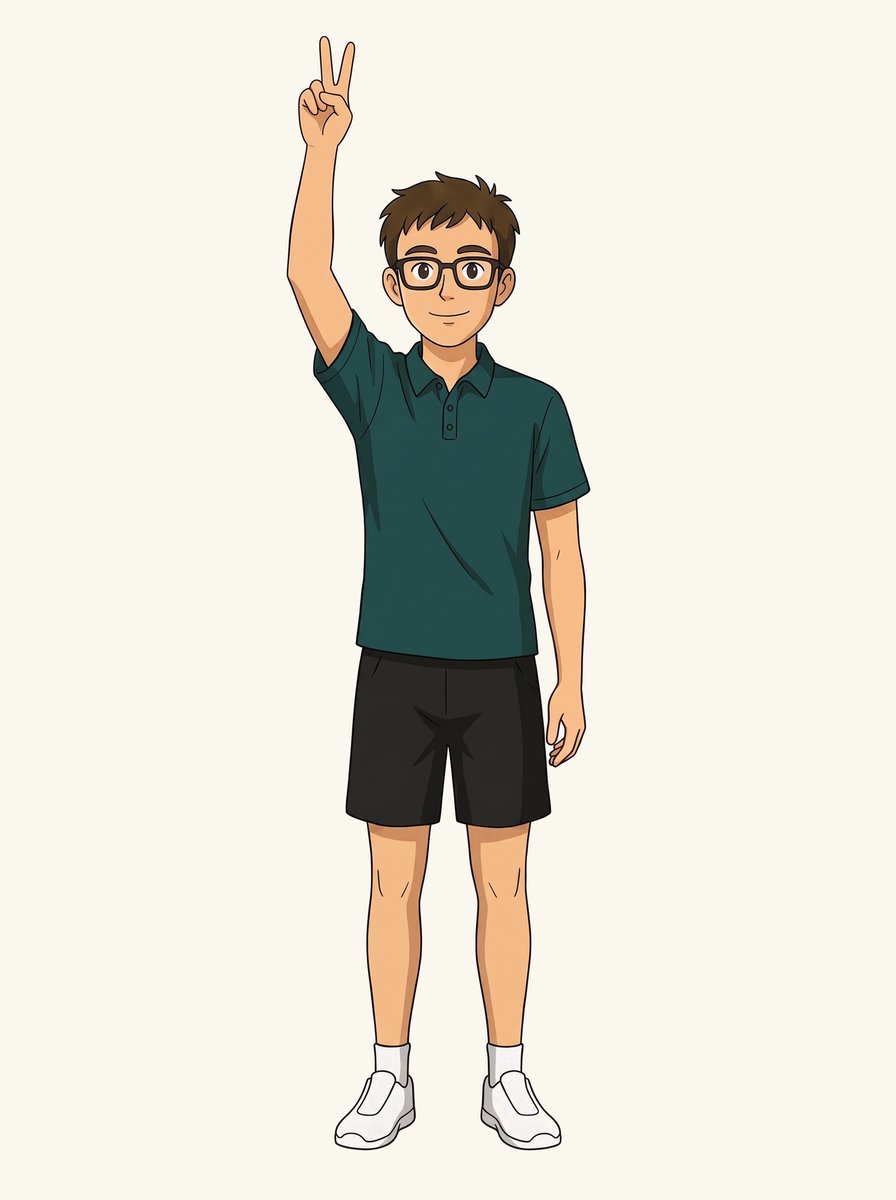
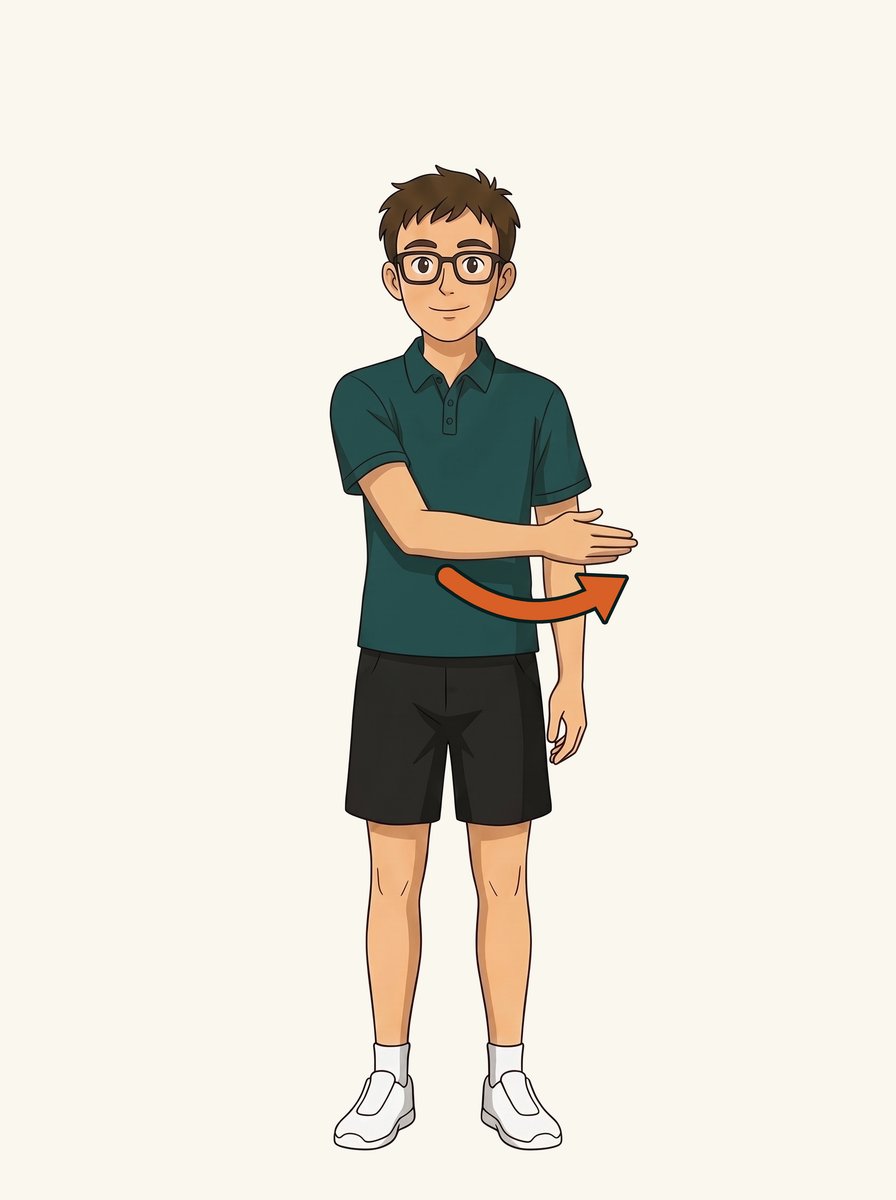
| Hand signal |
|
|
Another example
One more example of dangerous play from the same tournament, this time from Scotland v Republic of Ireland the day before. Work through the three questions again.
Dangerous play — a suspension for the defending GD.
The attacking Centre catches the ball in the air. The defending GD isn't making a play for the ball: she goes to step across the Centre but mistimes it, catching her on the leg while she is in the air and causing her to land dangerously.
There is contact, on a player in the air, and it causes an unsafe landing, so this is dangerous play. It isn't intentional or highly reckless — she has just mistimed stepping across — so it is a suspension.
Another good example from the umpires. They confer, nice and quickly, just to double-check. The umpire then waits until the GD is at the umpires' bench before restarting play, making sure the procedure is followed. The two minutes only start when play restarts, so there is no need to rush.
Rule 17.9(a) — contact is normally dangerous play when it involves "a player who pushes, grabs, holds, knocks or hits the arms, legs or body of an airborne opponent in a manner that puts safe landing at risk."
Rule 18.31 — "A player who is suspended must immediately leave the court and while off the court the suspended player is seated at the umpires' bench under the supervision of the reserve umpire."
Rule 18.33 — "The suspension period of two minutes playing time begins when play restarts."
Keep going
There is more on dangerous play, game management, and the procedures in this case study on the rest of the site.