What the Sheet Records
The running score sheet records two things: the score, and which team took each centre pass.
The umpires keep track of the centre pass themselves, but they may ask you to confirm the next one if they are unsure or if an on-court player queries it. Your sheet is the official record, so it's what you use to answer them (Rule 8).
At international level there are two scorers and two timekeepers. The rules allow fewer at other levels, though matches should have at least one scorer and one timekeeper (Rule 5). At club matches, these can end up being players from the teams, though it's better to have someone who isn't playing in the match, and some leagues require it.
Download the Score Sheets
Bring an extra-time sheet if your match could go to extra time.
If you'd rather watch than read, there's a six-minute video that fills in a running score sheet for an example match, from the toss to full time.

Video · 6:32
How to Fill In a Running Score Sheet
An example match filled in from the toss to full time: goals, centre passes, ruling off each quarter and the checks that keep the umpires right.
Before the Match
- Match details. Fill in the details at the top. Team 1 is usually the home team.
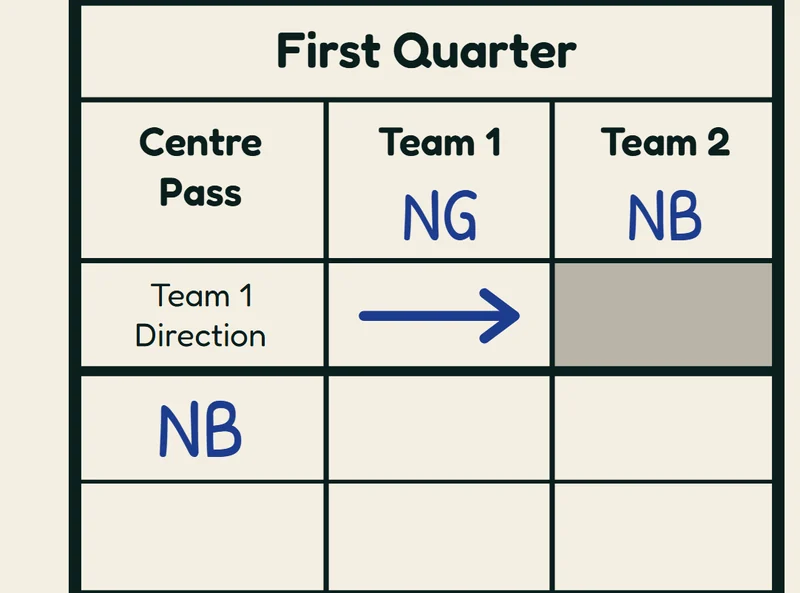
- Team abbreviations. Agree a one or two letter abbreviation for each team, with your fellow scorer if there is one. This matters most when both teams start with the same letter, as there's no single obvious choice: here, Northgate and Newbridge become NG and NB.
- The toss. The captains decide who has the first centre pass and which end each team shoots at, and should tell you both. If they don't, ask the umpires.
- The arrow. In the Team 1 Direction box, draw an arrow showing which way Team 1 are shooting in the first quarter, as you face the court.
- The first centre pass. Write the team with the first centre pass on the first line.
During the Match
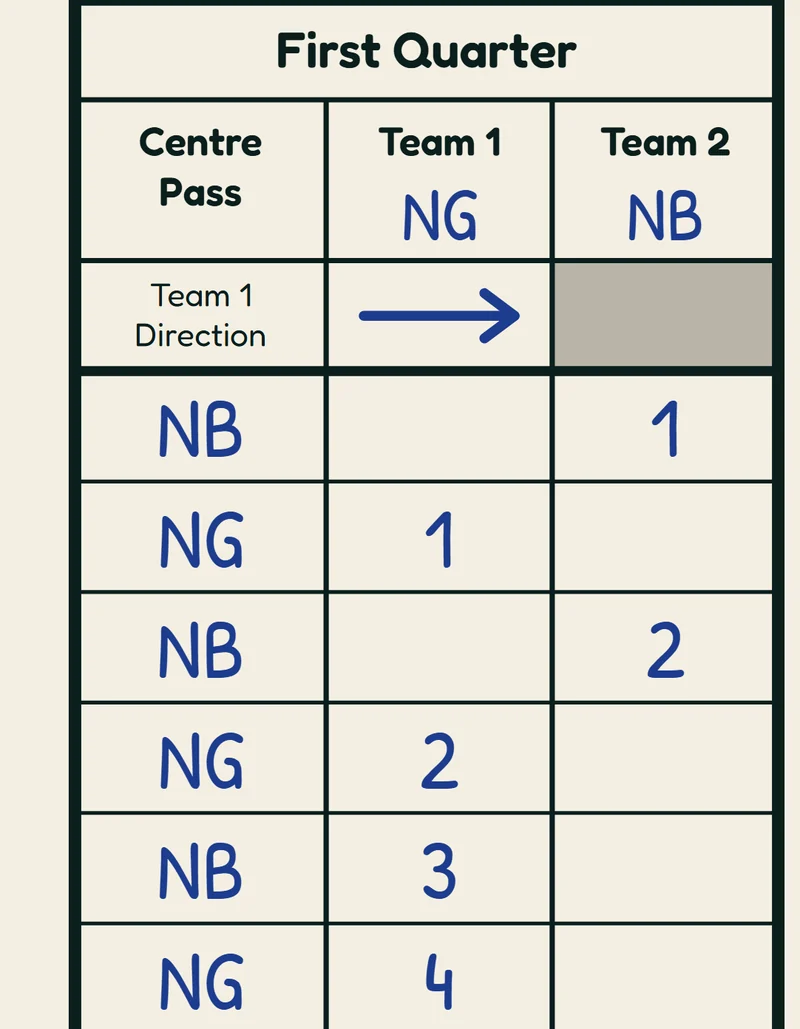
- When a goal is scored, write the scoring team's new total in their column, on the same line. It isn't always the team that had the centre pass.
- Write each centre pass once it has been taken. The centre pass alternates, whichever team scored.
- One centre pass and one number on each line, and each team's score keeps counting up through the whole match.
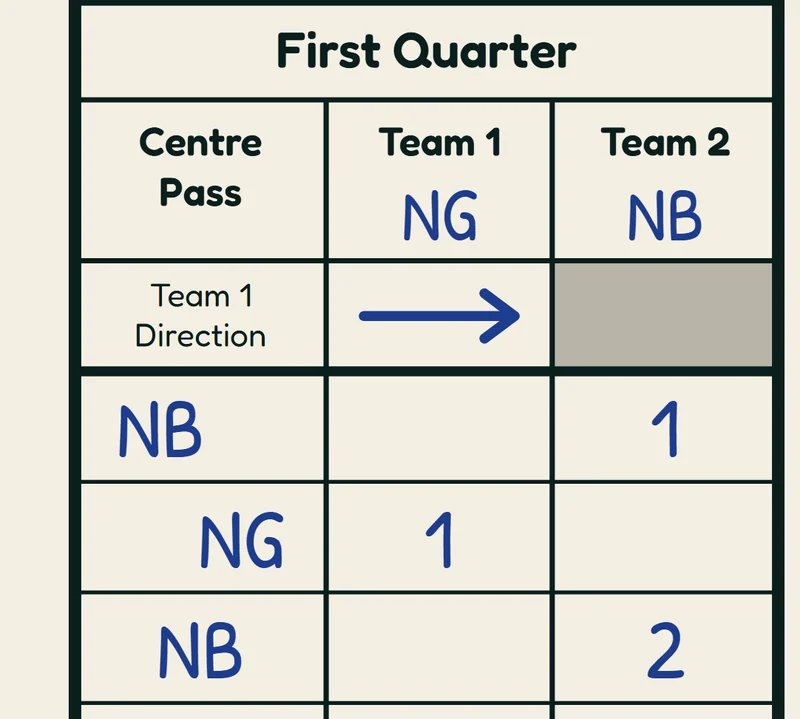
Some scorers set the letters to the left or right of the box, to show which way each pass is going. Writing them straight down is fine too.
Never Fill the Column in Ahead
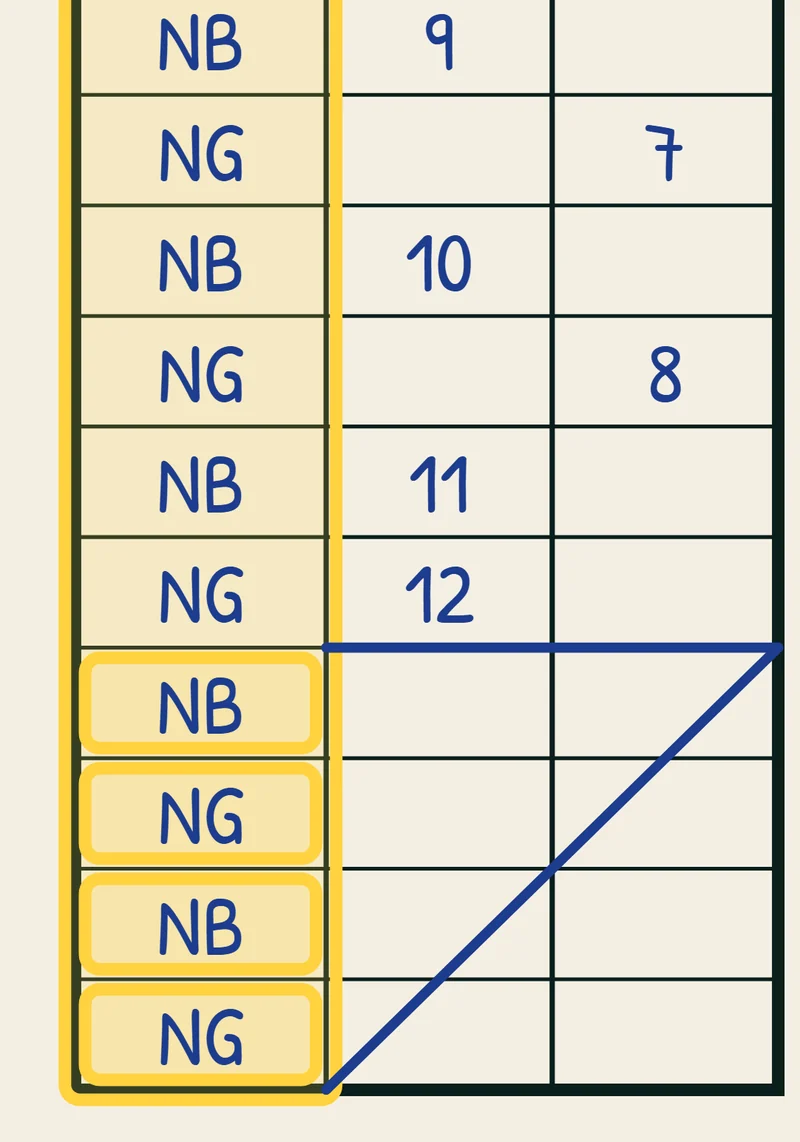
When the umpires ask who has the next centre pass, they want the next one, not the one you've just written down. Some scorers fill the whole column in before the start. Then nothing on the sheet shows which centre passes were actually taken, so it's hard to say who has the next one. And crossing out the extras at the end of the quarter leaves everyone unsure what really happened.
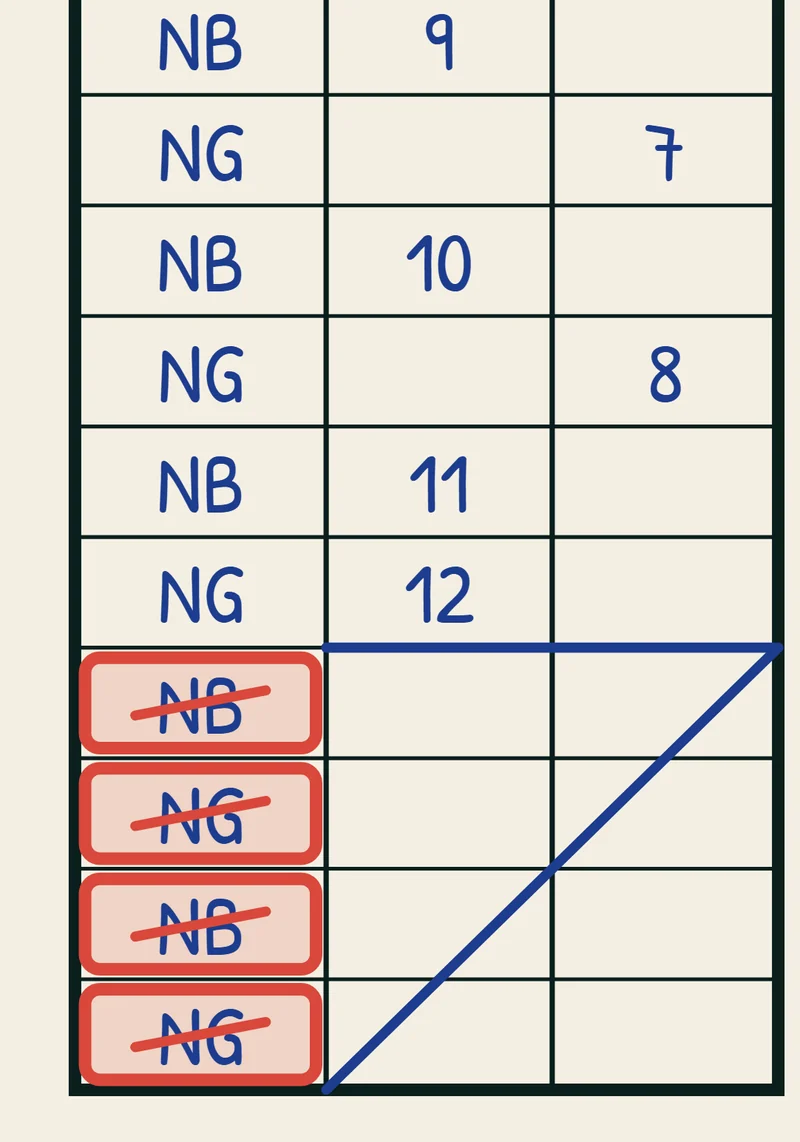
If the Wrong Team Is About to Take It
Alert the umpires straight away, before it's taken: with a horn if you have one, otherwise call out. Be extra alert after a stoppage, such as an injury or a tactical change. Once the centre pass has been taken, it's too late to change it, so record the team that took it and carry on alternating.
Check the Score
After each goal and at the start and end of each quarter, check that you and your fellow scorer have the same score, and that any scoreboard matches.
Mistakes
Put one neat line through the wrong entry and write the correct one beside it, or in the right column. Don't scribble it out.
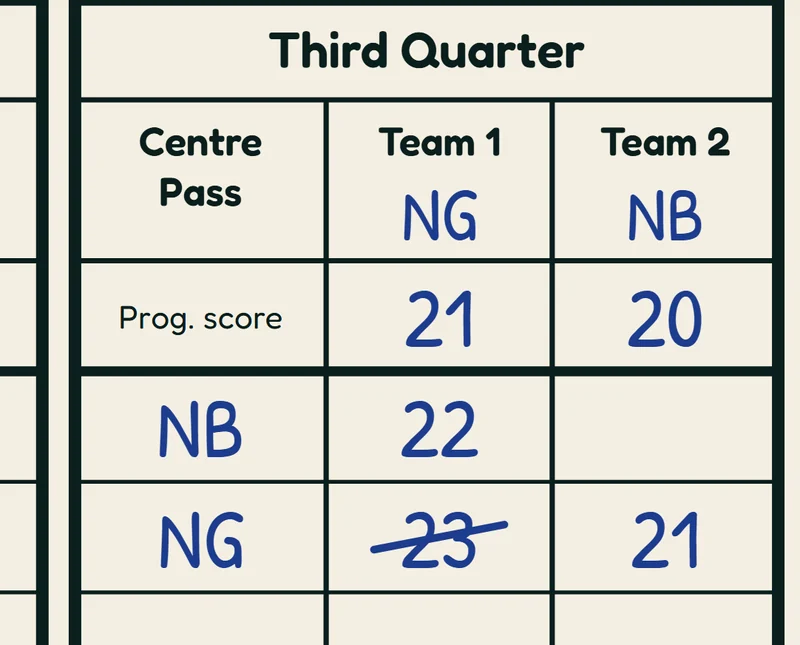
End of a Quarter
Rule each quarter off so nothing can be added later. What you draw depends on the last centre pass.
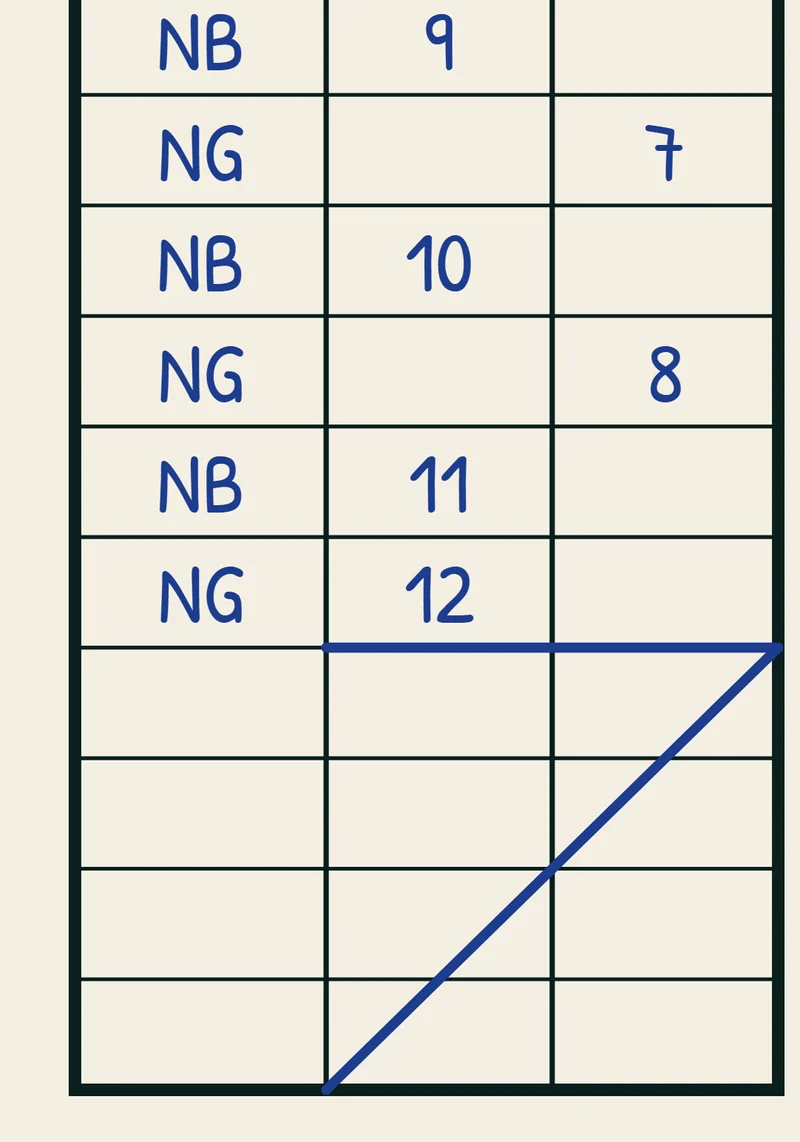
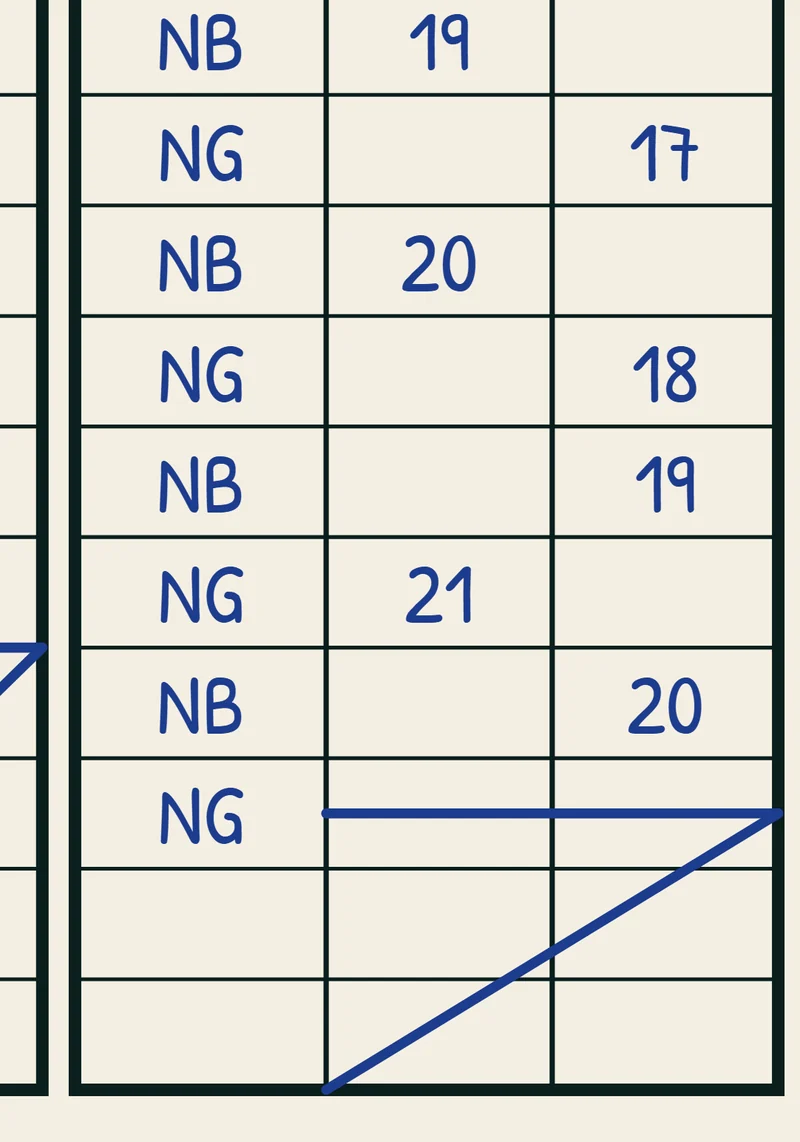
A centre pass can be whistled but not taken. If the quarter ends first, it hasn't been taken if:
- the ball is still in the Centre's hands, unless their team was penalised (for example for held ball or breaking); or
- the other team was penalised, and that free pass or penalty pass hasn't been taken yet.
If you're unsure, ask the umpires: they should confirm at the end of each quarter whether the last centre pass was taken.
If a shot goes in right on the whistle, confirm with the umpires that the goal counts before you write it.
Breaks and Full Time
At each break:
- Copy each team's score into the progressive score boxes at the top of the next quarter.
- Compare your sheet with your fellow scorer.
- Write the team with the next centre pass, as confirmed with the umpires, on the first line of the next quarter.
- Before the restart, check that the right team is setting up for the first centre pass.
At full time, rule off the last quarter, write the winning team and the final score at the bottom, and check it with your fellow scorer and the umpires. Get the sheet signed as your league requires, often by the team captains and the scorers, and complete any other paperwork.
Extra Time
Some competitions play extra time if the scores are level at full time. Under the rules, it's two halves of up to seven minutes each, and if the scores are still level after that, play carries on until one team leads by two goals. Competitions can set their own format, so check yours before the match.
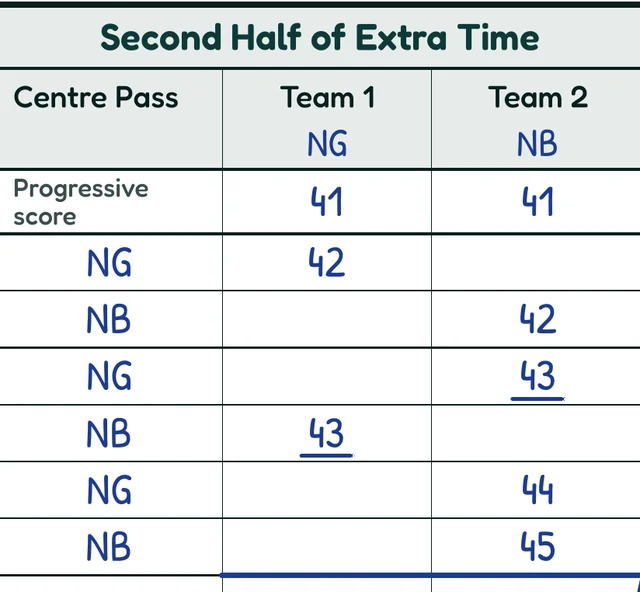
The main sheet has no room for extra time, so carry on with an extra-time sheet. Copy the full-time score into its first row, and keep alternating the centre pass from where the fourth quarter left off.
If the scores are still level after the second half, underline each team's last score, in the two cells where they appear, and carry on in the same columns until one team leads by two.
If your match could go to extra time, bring an extra-time sheet with you.
Quick Checklist
- Agree your team abbreviations.
- First centre pass once confirmed, the rest once taken.
- One centre pass and one number on each line.
- Rule off every quarter.
- Always know who has the next centre pass.